Partners exchanged knowledge on maternal mental health in crisis settings
As part of the Erasmus+ project MOMental – Cross-Border Collaboration for Maternal Mental Health in Crisis Settings, a transnational partner meeting and learning activity were held in Prague.
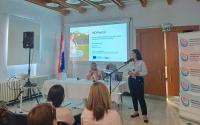
The MOMental project started in November 2025. The first transnational partner meeting was held in Zagreb, where partner organisations introduced their work, experience and expectations, and jointly discussed the methodology for developing the project’s main outputs: the Learning Guide, the Training-of-Trainers programme and the digital Learning Hub. Particular attention was given to evaluation, transparent communication and the involvement of relevant stakeholders in each partner country.
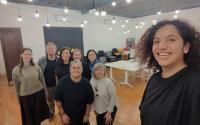
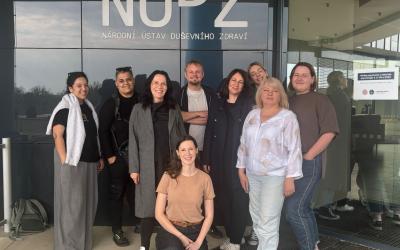
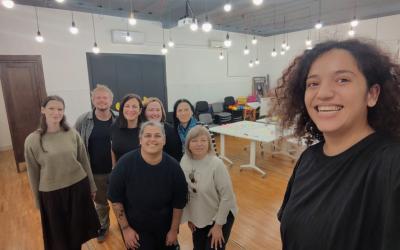
As a continuation of this cooperation, partners spent two days at the National Institute of Mental Health (NUDZ), the Czech project partner, while the remaining sessions took place in civil society meeting spaces in Prague. Alongside Roda and NUDZ, the meeting brought together project partners Birth Forward from Cyprus and the Ukrainian Midwives’ Union from Ukraine. The project’s associated partner, UNICEF, also joined part of the programme online.
MOMental focuses on strengthening mental health support for pregnant women and mothers living through different crisis situations – including war and displacement, natural hazards such as earthquakes and floods, as well as economic and climate-related crises. Such circumstances place additional pressure on health and social support systems, increase risks to maternal mental health and often reduce access to timely, high-quality care. Although the importance of perinatal mental health is well documented, it is still not sufficiently integrated into learning programmes, care protocols and support systems. This gap was one of the key themes of the Prague meeting.
The aim of MOMental is to connect organisations from four countries in order to improve knowledge, develop practical guidelines and strengthen capacities for providing adequate support to women and families in challenging environments. During the learning activity, partners worked together on the development of the project’s Learning Guide, building on mapped practices, needs assessments and the first conclusions from national consultations. The guide will provide a foundation for a more structured and practical approach to supporting pregnant women and mothers in crisis contexts. Partners also worked on the development of a structured learning programme aimed at care providers and other professionals who support women and families, including midwives, educators, breastfeeding counsellors, peer supporters and civil society workers. This Training-of-Trainers programme is one of the main activities of the project and will be further developed in the coming months. The final day was dedicated to project implementation and coordination. Partners agreed on the timeline for upcoming meetings, key deadlines and responsibilities for the next phase of work.
The meeting took place in an open and highly engaged working atmosphere. Partners underlined the importance of MOMental for improving mental health support in different crisis contexts – from war and migration to everyday barriers in access to health and social services.