MOMental focus group in Czechia maps barriers and needs in maternal mental health support
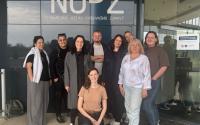
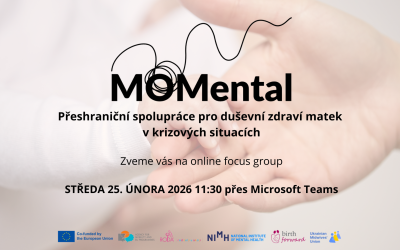
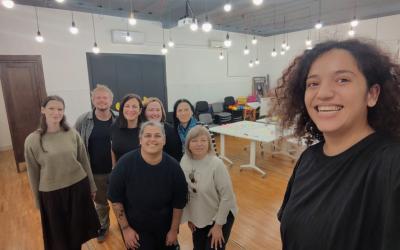
As part of the MOMental – Cross-Border Collaboration for Maternal Mental Health in Crisis Settings project, the National Institute of Mental Health in the Czech Republic organised an online expert focus group bringing together representatives of key frontline organisations and institutions.
Participants included representatives of NGOs such as People in Need, Locika Center, and the Association for Integration and Migration, as well as the Ministry of Labour and Social Affairs. The meeting aimed to map the real needs, systemic barriers, and good practices in supporting the mental health of pregnant women and postpartum mothers affected by crisis situations, including armed conflict, poverty, and natural disasters.
Discussions highlighted several important insights from the field. One of the key challenges is the limited availability of specialised psychiatric and psychological services, which often leaves social and field workers as the primary source of psychological support for vulnerable mothers. Despite their crucial role, these professionals frequently lack specialised training in mental health support.
Participants also noted that the nature of crisis-related needs evolves over time. For example, among refugees from Ukraine, deeper psychological trauma and the need for long-term mental health support have become more visible after initial humanitarian needs were addressed.
Another important finding was the strong demand for practical tools and clear methodologies that would help non-psychological professionals safely provide psychological first aid and support mothers in communicating about crisis events with their children. Language barriers and the lack of services for mothers facing multiple disadvantages, such as mothers of children with special needs, were also identified as significant systemic obstacles.
The insights gathered during this focus group will directly contribute to the development of educational materials and training programmes within the MOMental project, aimed at strengthening the capacity of professionals who support mothers in crisis contexts.
Disclaimer: Funded by the European Union. Views and opinions expressed are those of the author(s) only and do not necessarily reflect those of the European Union or the Agency for Mobility and EU Programmes (AMPEU). Neither the European Union nor the granting authority can be held responsible for them.