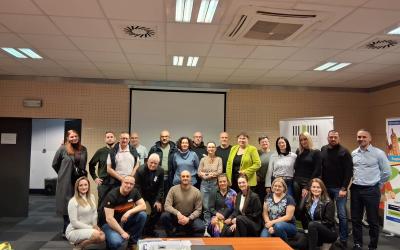
The Italian training model for Penitentiary Police is spreading throughout Europe through “Child Trust”, a project that, after its first year of work, has reached a key milestone: the first day of International Training, held at the Milan headquarters of Bambinisenzasbarre, the project's leader.
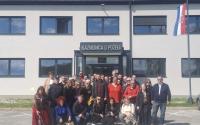
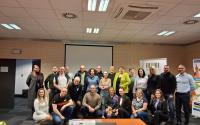
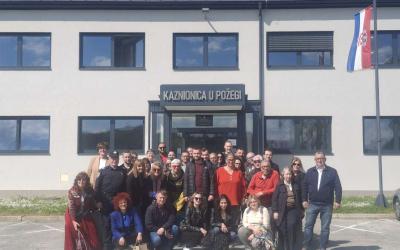
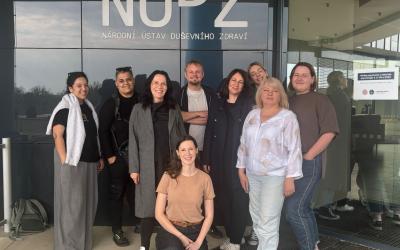
The meeting was attended by fifteen prison police officers from the four project partner countries—Croatia, France, and Poland—in a joint session, as well as workers from the NGOs that are foreign project partners.
The morning session was attended by Massimo Parisi, Deputy Head of the Department of Penitentiary Administration; Stefania D'Agostino, Director of Office II – PRAP Milan; Maria Piteniello, Director of the Milan San Vittore Correctional Facility; Rosalia Marino and Giorgio Leggieri, Directors of the Milanese prisons of Opera and Bollate; Silvana Resta, Head of the Opera Prison Treatment Area; partners from the host countries; and Carla Ciavarella, Vice President of the Committee for Penological Cooperation (PC-CP) at the Council of Europe.
The work was coordinated and conducted by Baminisenzasbarre, with contributions from Lia Sacerdote, President and Founder of the association; Martina Gallon, National Network Coordinator; Marta Ghironi, Lombardy Network Coordinator; and Edoardo Fleischner for COPE (Children of Prisoners Europe). In addition to those in person, representatives from dozens of Italian prisons and network partner associations of Bambinisenzasbarre joined the meeting via Zoom.
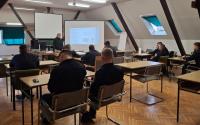
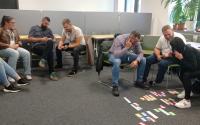
The afternoon session included an exercise on the ten commandments of Italian best practices; an example of a Penitentiary Police briefing, a good practice explained and analyzed by Maria Visentini, network coordinator. This was followed by testimonials from Italian prison staff who have received training and operational experience in France, Poland, and Croatia.
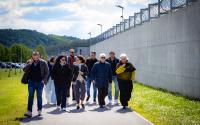
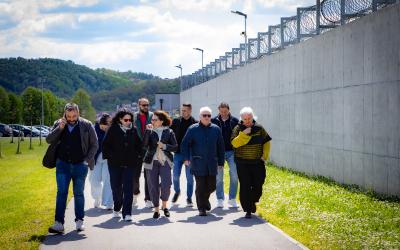
On November 26, the foreign guests enjoyed a special field training session at the Opera prison in Milan
Child Trust is the first training project in Europe for prison officers. Its overall goal is to create and disseminate a standardized model for prison staff across Europe. This model, designed and implemented over the years by Bambinisenzasbarre on behalf of the Department of Prison Administration, focuses on supporting the children of imprisoned parents . These children belong to a vulnerable group who often experience shame, stigma, and insecurity, and their relationships with their parents are complicated by the lack of child-sensitive procedures within prison systems. The European Child Trust project, which will last 24 months—we are now halfway through its project—aims to implement long-term systemic changes through the introduction of specialized training programs.
In addition to developing a common training model to improve the professional profile of prison staff, Child Trust focuses on two other main objectives: increasing their skills to support children and families, and raising awareness among civil society about the importance of procedures that respect children's rights.
The project not only provides practical tools and training to staff, but also promotes a change in the way children of incarcerated parents are perceived by the justice system, laying the foundation for a system that protects their rights and their need for emotional stability.
Photo: © Bambinisenzasbarre – photo by Andrea Lanzarotto.
Napisao/la: Roda
The CHILD TRUST Project – Children visiting parents – Training EU prison staff is funded by the European Commission through the Erasmus+ Programme.
This communication and its publications reflect solely the views of their authors and in no way represent the opinions or positions of the European Commission. The Commission cannot be held responsible for any use that may be made of the information contained herein.